Our Heritage
320 AD · Legio XII Fulminata · Armed with Lightning
The name Legion Twelve is not chosen at random. It carries the weight of 1,700 years.
In 320 AD, forty soldiers of the Legio XII Fulminata — the Twelfth Roman Legion, "Armed with Lightning" — were stationed near the city of Sebaste in Lesser Armenia. They were elite fighting men, hardened by campaigns, bound by discipline. And they were Christians.
When the Emperor Licinius issued edicts persecuting Christians in the East, these forty soldiers refused to renounce their faith. Their commander ordered them stripped and driven onto the ice of a frozen pond in the dead of winter — to die exposed, freezing, naked — unless they apostatized. Warm baths had been prepared on the shore as a temptation for any who broke.
Thirty-nine held. One broke — ran for the shore — and died in the warm bath, his heart already cold. But in that moment, one of the Roman guards watching over them, a man named Aglaius, witnessed something that defied explanation: a supernatural brilliance surrounding the dying soldiers. He tore off his own armor, walked onto the ice, and declared himself a Christian. The number forty remained complete.
At daybreak, those still alive were burned. Their ashes were thrown into a river. But Christians gathered the remains, and veneration of the Forty spread across the ancient world within a generation. Bishop Basil of Caesarea eulogized them only fifty years after their deaths, calling them a light to all who would follow.
These were not monks. They were warriors — trained fighters, members of history's most powerful military force, men who had everything to lose. They stood on the ice not because life meant nothing to them, but because Christ meant more.
Their example became the founding symbol of Legion Twelve: the warrior-saint who chooses suffering over apostasy, who holds formation when one man breaks, who finds a brother in the unlikely soldier who walks into the cold rather than watch brothers die alone.
Every man who drifts today is standing at the edge of that shore, staring at the warm bath. Legion Twelve exists to call men back onto the ice — together, in formation, eyes on Christ.
"They held the line. So must we."
"Brothers formed by fire will not bend easily to the world. The hearts and minds of our men are homes of Ignis Ardens — and they go out and set fire to the world around them with this divine spark."
Our Emblem
Legion Twelve
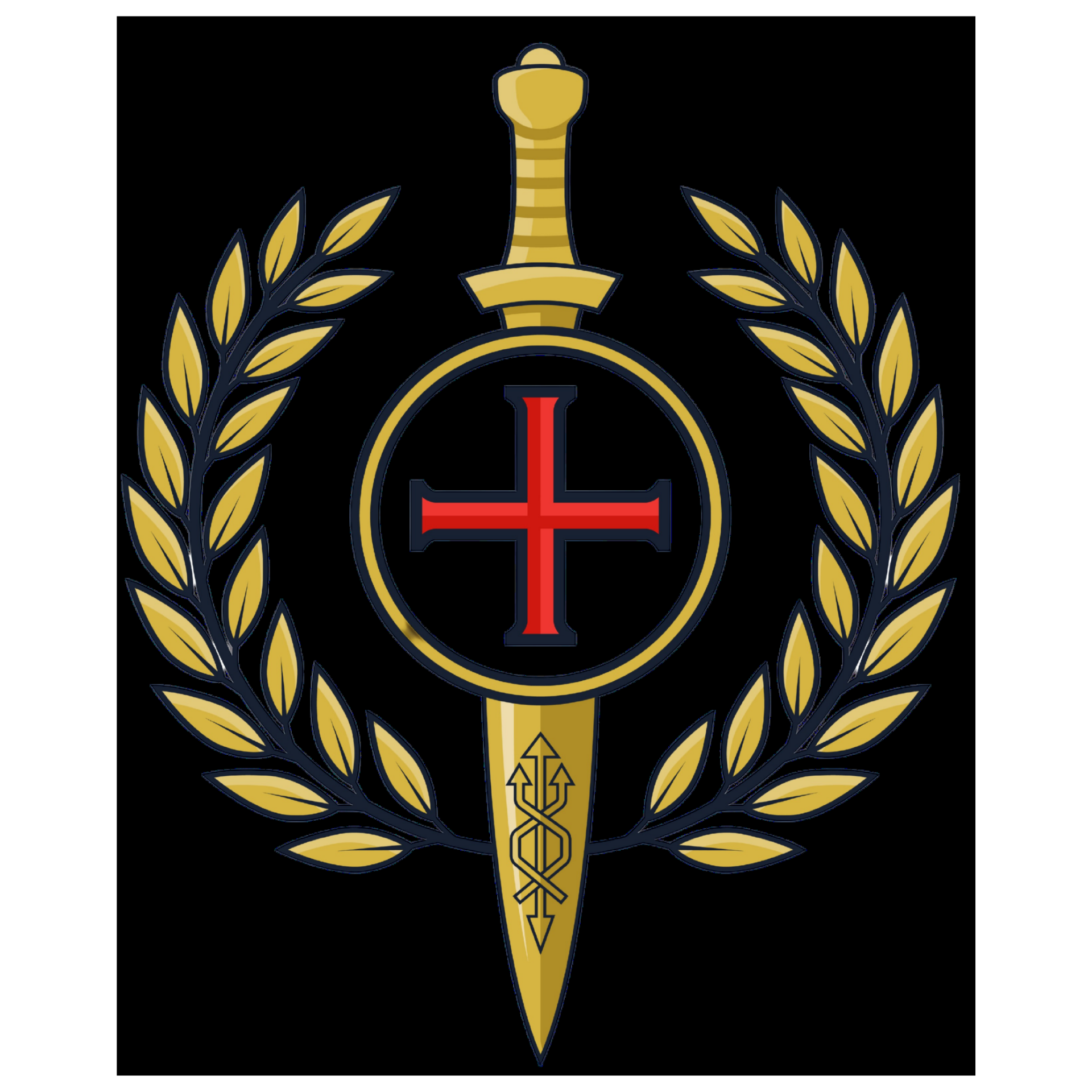
The cross potent is the symbol of inheritance — the unbroken band of brothers stretching from the Forty Martyrs of the Twelfth Legion, through the warrior-saints of the Crusades, to the Hospitallers whose charge was to protect pilgrims pressing toward the New Jerusalem. Christ himself commanded it: “Let him who has no sword sell his cloak and buy one.” (Luke 22:36) We bear this cross because we are heirs of that same call — soldiers and saints, sword and spirit, in one vocation.
The original Twelfth Legion bore the title Fulminata — the Thunderbolt — for a reason history has not forgotten. Surrounded and dying of thirst in battle, the Christian soldiers of the Twelfth prayed. The sky answered with lightning that struck their enemies and rain that saved their men. We carry three bolts: one for that divine deliverance, one for the call of every man to rise above the modern morphine drip that numbs the soul and poisons the will, and one for the ancient petition — calling down the lightning of the Lord in prayer, trusting that God still moves on behalf of those who cry out to Him.
The martyrs did not die in defeat. They stepped onto that frozen lake in Sebaste and sang. They died with their faces toward heaven, not away from it. The saints who fell were the ones who triumphed — their deaths broke the power of the world over them and purchased a glory that no emperor could touch. We do not mourn them. We imitate them. Legion Twelve exists because their example demands it: men who are glad to be alive, and gladder still to die for something true.
The wreath that encircles the emblem is not a trophy of earthly conquest. It is the stephanos — the victor’s crown promised to those who endure. Paul writes: “I have fought the good fight, I have finished the race, I have kept the faith. Henceforth there is laid up for me the crown of righteousness.” (2 Timothy 4:7–8) The Forty Martyrs were offered their lives if they would recant. They refused, and stepped into the cold water singing hymns. They ran the race to the end. The wreath above every legionnaire’s head is the reminder that we do not fight for applause, rank, or recognition — we fight for a crown that does not rot, awarded by the only Judge whose verdict lasts forever.
“He said to them, ‘But now let him who has a moneybag take it, and likewise a knapsack. And let him who has no sword sell his cloak and buy one.’”
Luke 22:36